
Master AI Governance Risk Compliance Training
Learn Certifyi equips professionals with practical skills in AI governance, risk management, and compliance. Our expert-led courses cover ISO 42001, NIST AI RMF, and the EU AI Act to help you navigate the evolving AI regulatory landscape.
Corporate Training
Customized AI GRC training programs for your organization. Contact us for tailored corporate workshops and certification preparation courses.
Why AI Compliance Training Matters in 2025
Artificial intelligence is transforming industries worldwide, but with rapid adoption comes growing regulatory scrutiny. Organizations deploying AI systems now face mandatory compliance obligations under frameworks such as the EU AI Act, ISO/IEC 42001, and the NIST AI Risk Management Framework (AI RMF). Failure to comply can result in penalties up to 35 million EUR or 7% of global annual turnover under the EU AI Act alone.
AI compliance training ensures that your teams understand how to classify AI risk levels, implement proper governance controls, conduct impact assessments, and maintain ongoing regulatory adherence. Whether you are a compliance officer, risk manager, data protection officer, or technology leader, practical AI GRC skills are now essential for career advancement and organizational resilience.
Key AI Compliance Frameworks Explained
Understanding the global AI regulatory landscape is critical for any organization building or deploying artificial intelligence. Three primary frameworks define the current AI compliance environment:
EU AI Act
The EU AI Act is the world's first comprehensive AI regulation. It classifies AI systems into four risk categories: unacceptable, high, limited, and minimal risk. High-risk AI systems must meet strict requirements for data governance, transparency, human oversight, accuracy, and cybersecurity. The Act applies to any organization offering AI products or services within the European Union, regardless of where they are based.
- Risk-based classification of AI systems
- Mandatory conformity assessments for high-risk AI
- Transparency obligations for general-purpose AI
- Penalties up to 35M EUR or 7% of global turnover
- Phased enforcement beginning February 2025
ISO/IEC 42001
ISO/IEC 42001 is the first international management system standard for artificial intelligence. It provides a structured framework for organizations to establish, implement, maintain, and continually improve an AI Management System (AIMS). The standard follows the familiar Annex SL structure, making it compatible with ISO 27001, ISO 9001, and other management system standards.
- Certifiable management system standard
- Addresses responsible AI development and use
- Requires AI impact assessments
- Integrates with existing management systems
- Applicable to organizations of all sizes
NIST AI RMF
The NIST Artificial Intelligence Risk Management Framework helps organizations identify, assess, and mitigate AI-related risks. Built around four core functions — Govern, Map, Measure, and Manage — it provides flexible, risk-based guidance adaptable to any industry or organization size. While voluntary, it is widely recognized as a best-practice standard for AI risk management in the United States and internationally.
- Four core functions: Govern, Map, Measure, Manage
- 60+ controls across risk categories
- Applicable to all AI system lifecycles
- Voluntary but increasingly referenced in regulation
- Complementary to ISO 42001 and the EU AI Act
Who Needs AI Compliance Training?
AI compliance is not limited to legal or IT departments. As AI systems become embedded across business functions, a broad range of professionals must understand their governance and compliance obligations:
Compliance Officers and Risk Managers
Responsible for ensuring organizational adherence to AI regulations, conducting risk assessments, and developing internal AI governance policies. Training in ISO 42001 and the EU AI Act is essential for these roles.
Data Protection Officers (DPOs)
AI systems process vast amounts of personal data. DPOs need to understand how AI-specific regulations like the EU AI Act intersect with GDPR requirements, particularly around automated decision-making and data protection impact assessments.
Technology Leaders and AI Engineers
CTOs, AI architects, and machine learning engineers must understand technical compliance requirements including model documentation, bias testing, transparency reporting, and conformity assessments for high-risk AI systems.
Board Members and Executives
Senior leadership carries ultimate accountability for AI governance. Understanding the strategic implications of AI compliance frameworks helps executives make informed investment decisions and manage organizational AI risk effectively.
Internal Auditors
AI auditing is an emerging discipline requiring specialized knowledge. Auditors must learn to evaluate AI systems for fairness, accuracy, robustness, and regulatory compliance using frameworks like ISO 42001 and the NIST AI RMF.
AI Compliance Training FAQ
What is AI compliance?
AI compliance refers to the process of ensuring that artificial intelligence systems meet applicable legal, regulatory, and ethical requirements. This includes adherence to frameworks such as the EU AI Act, ISO/IEC 42001, and the NIST AI Risk Management Framework. AI compliance covers areas including risk classification, data governance, transparency, human oversight, bias mitigation, and accountability throughout the AI system lifecycle.
What is ISO 42001 and why does it matter?
ISO/IEC 42001 is the first international standard for AI Management Systems (AIMS). Published in 2023, it provides organizations with a certifiable framework to responsibly develop, deploy, and manage AI systems. It matters because it demonstrates to regulators, customers, and stakeholders that your organization has implemented systematic controls for AI governance, risk management, and ethical AI practices.
What is the EU AI Act and when does it take effect?
The EU AI Act is the European Union's comprehensive regulation governing artificial intelligence. It classifies AI systems by risk level (unacceptable, high, limited, and minimal) and imposes corresponding obligations. Key milestones include: prohibitions on unacceptable-risk AI from February 2025, high-risk AI requirements from August 2026, and full enforcement by 2027. Organizations worldwide must comply if they offer AI products or services in the EU market.
What is the NIST AI Risk Management Framework?
The NIST AI RMF is a voluntary framework developed by the U.S. National Institute of Standards and Technology to help organizations manage AI-related risks. It is structured around four core functions: Govern (establish AI governance), Map (identify AI risks in context), Measure (assess and monitor risks), and Manage (mitigate and respond to risks). While voluntary, it is increasingly referenced in U.S. policy and international AI governance discussions.
How do the EU AI Act, ISO 42001, and NIST AI RMF work together?
These three frameworks are complementary rather than competing. ISO 42001 provides the management system structure for AI governance, the NIST AI RMF offers detailed risk management methodology, and the EU AI Act defines specific legal compliance requirements. Organizations often implement all three: ISO 42001 as their governance foundation, NIST AI RMF for risk assessment methodology, and EU AI Act compliance for market access in Europe.
Who needs AI compliance training?
AI compliance training is essential for compliance officers, risk managers, data protection officers, internal auditors, technology leaders, AI engineers, board members, and anyone involved in developing, deploying, or governing AI systems. As AI regulations expand globally, professionals across industries including financial services, healthcare, manufacturing, and technology need to understand their AI compliance obligations.
What are the penalties for AI non-compliance under the EU AI Act?
The EU AI Act imposes significant penalties for non-compliance. Violations related to prohibited AI practices can result in fines up to 35 million EUR or 7% of global annual turnover. Non-compliance with high-risk AI requirements can lead to fines up to 15 million EUR or 3% of turnover. Providing incorrect information to authorities can incur fines up to 7.5 million EUR or 1% of turnover.
What is an AI impact assessment?
An AI impact assessment is a structured evaluation of the potential risks and effects of an AI system on individuals, groups, and society. Required under both the EU AI Act (for high-risk systems) and ISO 42001, these assessments examine factors including bias and discrimination, privacy impacts, safety risks, transparency, accountability, and environmental effects. They help organizations identify and mitigate risks before deploying AI systems.
How can I get started with AI compliance training?
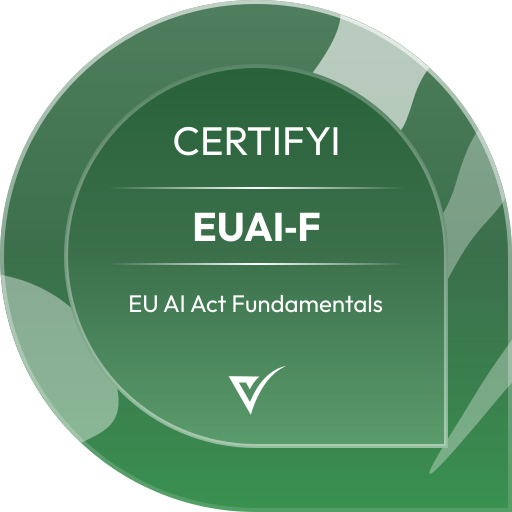
Learn Certifyi offers structured, expert-led courses covering all major AI compliance frameworks. Start with our EU AI Act Fundamentals course to understand the regulatory landscape, then progress to ISO 42001 implementation and NIST AI RMF courses. Our training is designed for both technical and non-technical professionals, with practical exercises and real-world case studies to build immediately applicable skills.
Does the EU AI Act apply to companies outside Europe?
Yes. The EU AI Act has extraterritorial scope, meaning it applies to any organization that places AI systems on the EU market or whose AI systems produce outputs used within the EU, regardless of where the organization is headquartered. This is similar to how GDPR applies to non-EU companies processing EU residents' data. Companies in the US, Asia, and elsewhere must comply if they serve EU users or markets.

Our Certification Programs
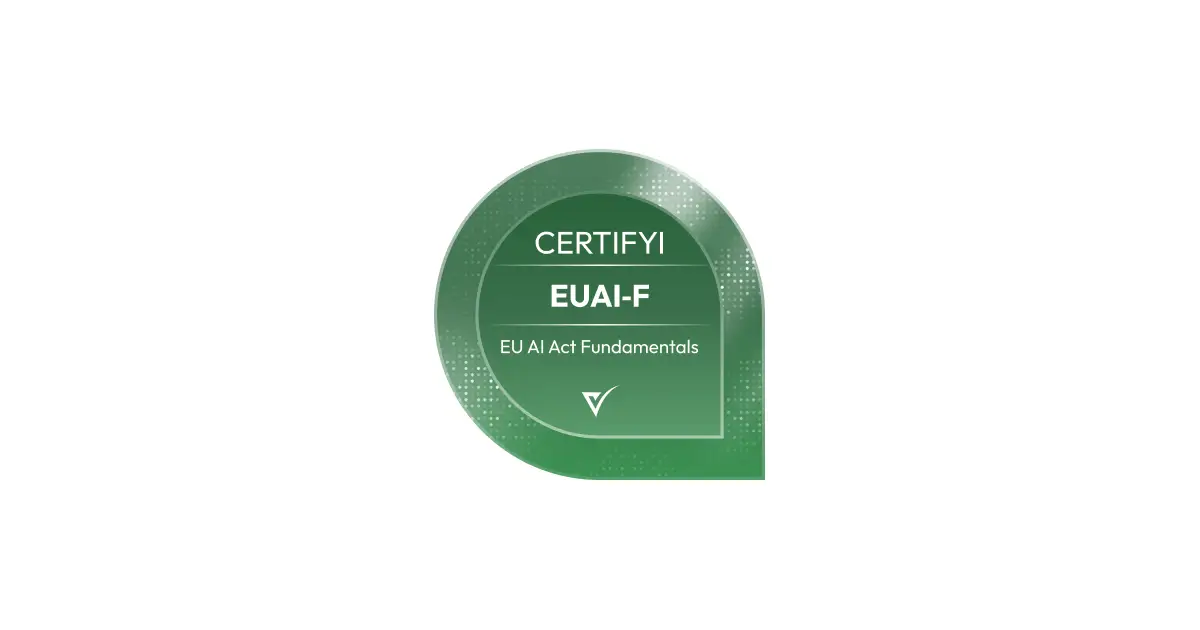
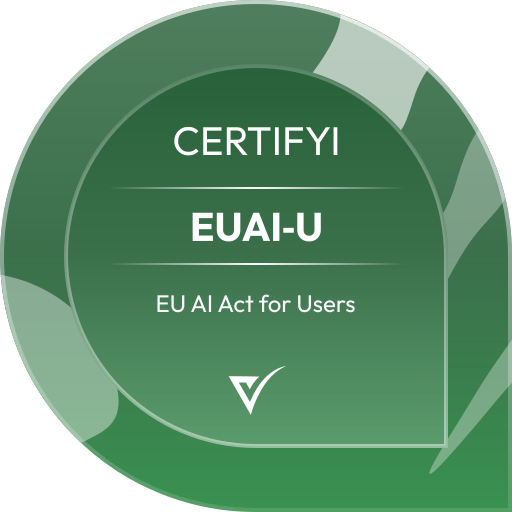
Explore our comprehensive range of AI governance, risk, and compliance certifications. Currently offering EUAI-U (EU AI Act for Users), with additional programs launching soon to help professionals master critical AI GRC frameworks and regulations.
Start Your AI Compliance Journey Today
Join professionals worldwide who are building essential AI governance skills with Learn Certifyi. Our expert-led courses on ISO 42001, the EU AI Act, and NIST AI RMF prepare you for the regulatory challenges ahead.